Product Description
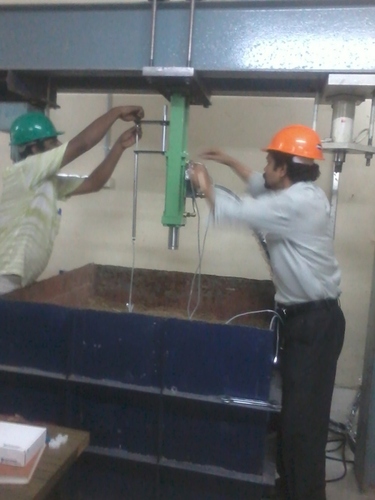
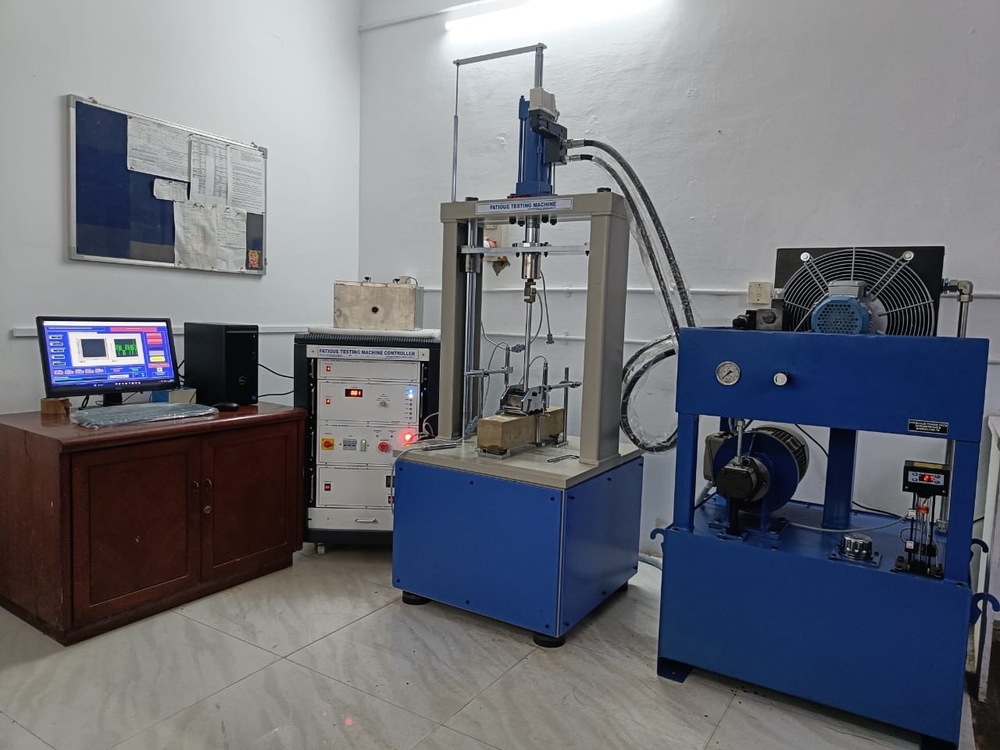
With desire to cement our reputation in this domain, we are engaged in offering the best quality Static Soil Testing Machine that is extensively used for testing soil. The machine provided by is manufactured using quality tested components and advanced technology by our dexterous professionals in tandem with set industry standards. Moreover, we provide this Static Soil Testing Machine in various models and technical specifications for our clients to chose from.
Features:
- Flawless performance
- Rust proof body
- High strength
- Low power consumption
Versatile Soil Testing ApplicationsDesigned for laboratory settings, the Static Soil Testing Machine supports unconfined compressive strength, triaxial compression, and consolidation tests, essential for determining soil properties and behavior under load. Its adjustable loading rate allows researchers to simulate various field conditions, making it ideal for academic, construction, and geotechnical investigations.
Reliable Construction and Safety FeaturesBuilt from high-grade mild steel with a powder-coated, corrosion-resistant finish, the machine promises durability and longevity. Enhanced safety through overload and short-circuit protection, alongside compliance with IS:2720 and ASTM standards, ensures confidence during testing operations. Its insulation box maintains thermal stability for accurate test results.
Precision and Convenience in Data OutputEquipped with a manual hand wheel and a calibrated loading unit monitored by a dial gauge, this machine provides analog data output. For enhanced analysis and record-keeping, digital reading compatibility is available as an option. Each unit includes essential accessories, a calibration certificate, and operates across a practical temperature range, simplifying laboratory integration.
FAQs of Static Soil Testing Machine:
Q: How is the Static Soil Testing Machine operated during laboratory soil tests?
A: The machine is operated manually using a hand wheel and calibrated loading system, where force is applied to soil samples and measured with the built-in dial gauge. The loading rate can be adjusted between 1.25 mm/min to 2 mm/min, enabling controlled and repeatable test procedures.
Q: What soil tests can be conducted with this machine and how does compatibility benefit users?
A: This machine supports unconfined compressive strength, triaxial compression, and consolidation tests. Its compatibility streamlines various test procedures, saving time and facilitating comprehensive soil mechanics analysis in a single setup.
Q: When should the insulation box be used during testing?
A: The insulation box should be deployed when thermal stability is critical, such as when environmental temperature fluctuations could affect soil behavior or measurement accuracy. It maintains consistent conditions for reliable results.
Q: Where is this soil testing machine ideally installed within a laboratory?
A: Owing to its standard laboratory bench-top size (650 mm x 350 mm x 800 mm), the machine fits conveniently on most laboratory workbenches, ensuring accessibility and efficient workflow during soil mechanics assessments.
Q: What is the process for calibrating and maintaining measurement accuracy?
A: Each machine is supplied with a calibration certificate; periodic recalibration using certified weights and gauges is recommended to maintain its 1% full-scale measurement accuracy. Good practice includes routine checks and avoiding overloads.
Q: How does this machine ensure specimen safety and operator protection?
A: It features overload and short-circuit protection systems that prevent equipment or sample damage during high-load tests, complying with safety standards outlined by IS:2720 and relevant ASTM certificates.
Q: What are the key benefits of using a mains-operated system over battery-powered alternatives in laboratory settings?
A: Mains operation offers uninterrupted power, ensuring consistent loading and measurement processes. This eliminates downtime due to battery changes and supports precision testing required for soil mechanics research.





 Send Inquiry
 Send Inquiry
 Send SMS


 English
 Spanish
 French
 German
 Italian
 Chinese (Simplified)
 Japanese
 Korean
 Arabic
 Portuguese