Product Description
Capacity: 0 to100 KGs
Furnace Temperature capacity: 800 Deg C working temperature with vacuum, recommended temperature range with out vacuum is less than or equal to 500 Deg C
Indenter Diameter : 1,1.5 mm, material Tungsten carbide
Specimen Dimension : 4 to 10 mm thick, circular/square suitable to specimen platform(30 mm)
LVDT: 0 to5 mm with 1 micron resolution, Load cell :100 KG capacity
Vacuum Range: 10 pow-5 m-bar max
Stress range: 1248 MPA max using 1 mm indenter, 555 MPA using 1.5 mm indenter.
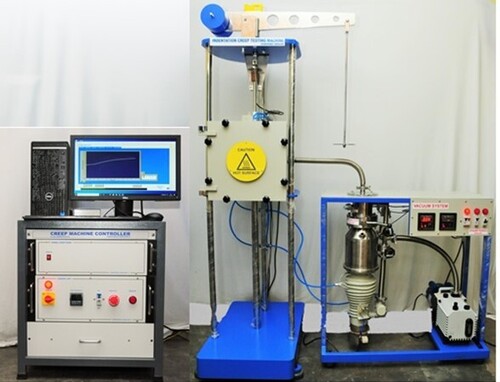
Banking on our hi-tech manufacturing facility, we are affianced in providing our clients superior quality Indentation Creep Testing Machine. This machine is manufactured with high precision to meet the set quality standards under the guidance of our deft professionals with the utilization of optimum grade components and ultra-modern technology. As the name implies, this machine is used to calculate stress rate, time and pressure in various industries. We offer this Indentation Creep Testing Machine in different technical specifications as per the demands of our clients at affordable rates.
Features:
-
Noise free operation
-
High performance
-
Rugged design
-
Long service life
Consistent and Accurate TestingWith a digital PID controller and uniform temperature distribution, this machine delivers repeatable and accurate results. Automatic data logging and a precise load application enable comprehensive research and quality control analysis of plastics and polymers.
Efficient and User-Friendly DesignFeaturing a backlit LCD for clear readouts, the testing process is straightforward. The machine is equipped with safety features including overheating protection and is validated with a traceable calibration certificate for reliable operation.
Wide Application VersatilitySuitable for research institutes, educational facilities, and quality control departments, this machine tests up to three specimens simultaneously. Continuous operation capability and robust construction broaden its versatility in plastics and polymer testing.
FAQs of Advanced Impression Creep Testing Machine:
Q: How does the Advanced Impression Creep Testing Machine apply and control load during testing?
A: The machine uses a dead weight lever system with precision weights, ensuring accurate and stable application of load up to 20 kg/cm. This method allows consistent loading throughout the duration of each test.
Q: What is the process for recording and monitoring test results with this machine?
A: A digital timer and load indicator, integrated with data logger functionality, automatically record all relevant test parameters. The backlit digital LCD display offers real-time readouts, and data can be retrieved for analysis and documentation.
Q: When should the machine be recalibrated to maintain accuracy?
A: The machine comes with a traceable calibration certificate upon delivery. Periodic recalibration is recommended as per the manufacturers guidelines or according to laboratory quality assurance schedules to ensure measurement accuracy is maintained.
Q: Where can this creep testing machine be used effectively?
A: Ideal for laboratories in research institutes, educational settings, and quality control departments, the machines standard lab size and corrosion-resistant chamber suit a range of controlled test environments.
Q: What are the benefits of using a digital PID temperature controller in this equipment?
A: The digital PID controller maintains precise temperature control (1C uniformity) within the chamber, which is critical for consistent and reliable impression creep test results across the entire duration of the experiment.
Q: How many specimens can be tested simultaneously?
A: The testing machine is designed to accommodate up to three specimens per test cycle, enhancing productivity and enabling comparative studies within a single operation.
Q: What protection features does the machine offer during operation?
A: It is equipped with an overheating protection system that automatically shuts off the machine if unsafe temperatures are detected, safeguarding both the specimens and the equipment.



 Send Inquiry
 Send Inquiry
 Send SMS
 Call Me Free


 English
 Spanish
 French
 German
 Italian
 Chinese (Simplified)
 Japanese
 Korean
 Arabic
 Portuguese